
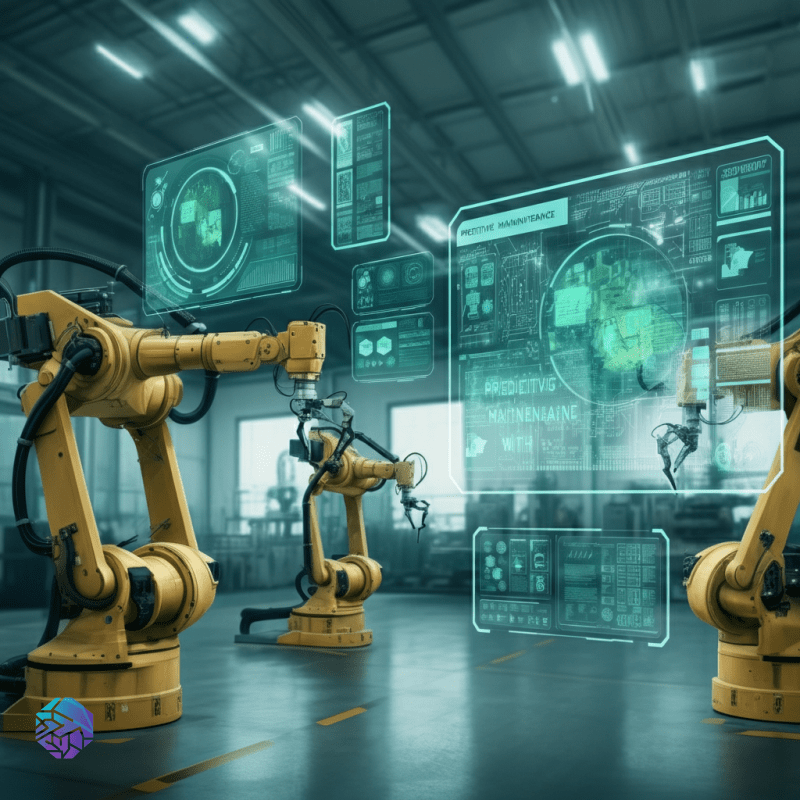
Predictive maintenance powered by Artificial Intelligence (AI) is transforming the industry by enabling companies to anticipate failures, optimize processes, and reduce costs. In this article, we explore how this technology is redefining asset management, highlighting its benefits, challenges, and future trends.
Summary
What is AI-Powered Predictive Maintenance?
Predictive maintenance with Artificial Intelligence uses advanced algorithms and machine learning to analyze real-time data collected from sensors installed in industrial equipment.
This approach allows you to predict failures before they occur, optimizing maintenance schedules and significantly reducing unplanned downtime.
Furthermore, by anticipating potential problems, this technology helps to increase the lifespan of equipment. With continuous data analysis, industries can perform maintenance more efficiently, saving resources and improving overall productivity.
How Predictive Maintenance with AI Works
Predictive maintenance with artificial intelligence (AI) operates through a structured process that involves collecting and analyzing data to predict failures and optimize preventive actions. IoT sensors continuously monitor variables such as temperature, vibration, pressure, and energy consumption, sending this information to AI systems that process the data in real time.
Using advanced algorithms, AI identifies patterns and anomalies, allowing predictive models to estimate when and where a failure might occur. Based on these analyses, the system generates maintenance recommendations, helping companies avoid unexpected downtime and reduce operating costs.
"Successful companies don't just react to problems, they anticipate them. Predictive maintenance with AI turns challenges into opportunities, ensuring efficiency, cost reduction and competitive advantage."
Additionally, AI improves its predictions over time, adjusting to new data and making analyses increasingly accurate. Implementing AI-based predictive maintenance offers significant benefits, such as reduced operating costs, increased efficiency and operational safety, and smarter resource management.
However, it is important to consider the associated challenges, such as the need for investment in technology and staff training, as well as ensuring the quality of the data collected for accurate analysis.
Benefits of Predictive Maintenance with AI
Reduction of Operating Costs
Predictive maintenance can result in significant savings. According to McKinsey, this approach can reduce maintenance costs by up to 20% and increase equipment availability by up to 20%. To understand how these savings translate into an improved return on investment (ROI), check out the article “Transform Your ROI: How AI Reduces Costs and Optimizes Operations”, which explores practical financial optimization strategies through artificial intelligence.
Increased Operational Efficiency
The Deloitte reported that predictive maintenance can result in a 5-15% reduction in facility downtime and a 5-20% increase in workforce productivity.
Extending the Lifespan of Equipment
By identifying problems early, predictive maintenance can increase the lifespan of machines from 20% to 40%, according to data from McKinsey.
Improved Security
Preventing failures before they occur reduces the risk of accidents, improving the safety of workers and facilities.
Technologies Used
Modern technology integrates several concepts that, together, transform the way we operate and make decisions. For example, Internet of Things (IoT) consists of connected sensors that collect data in real time, enabling continuous monitoring of environments and processes. This massive collection of information feeds the Big Data, which processes large volumes of operational data to extract valuable insights.
In parallel, the Machine Learning uses algorithms that learn from historical data, improving their predictions and contributing to more accurate and efficient decision-making. Complementing this structure, Cloud Computing offers the ability to store and process data on a large scale, ensuring flexibility and scalability to meet the demands of modern operations.
Success Stories
General Electric (GE)
The GE implemented predictive maintenance on its aviation turbines, using IoT sensors to monitor operating conditions in real time. With this approach, the company was able to reduce maintenance costs by up to 25% and significantly increase the reliability of its turbines.
Siemens
The Siemens uses digital twins and machine learning to predict failures in its wind turbines. The results include increased maintenance efficiency, reduced downtime, inactivity in 50% and improvement in energy production.
Ceará Steel Group
The Portfolio Group carried out a project to predict failures in industrial machinery using AI in Ceará Steel Group. The work involved installing IoT sensors on the machinery to obtain readings on its operation, analyzing variables such as production, demand, energy and fuel consumption, and creating a logistics model to predict failures. The benefits included reducing direct and indirect impacts caused by stoppages in the production chain, such as loss of time, money, energy and raw materials.
Usiminas
Usiminas implemented a predictive maintenance system with AI, achieving significant reduction in maintenance costs, increased equipment availability and improved strategic decision-making related to maintenance. These cases demonstrate how predictive maintenance with AI is transforming the industry, enabling companies to optimize their operations, reduce costs and increase the reliability of their equipment.
Challenges and Considerations
Predictive maintenance with artificial intelligence (AI) presents challenges that need to be considered to ensure its effectiveness. One of the main factors is the data quality, since the accuracy of the analyses depends on the quantity and reliability of the information collected. Without consistent data, predictive models can generate inaccurate or irrelevant results.
Another critical point is the systems integration, since the AI solution must be compatible with existing maintenance management software. This requires planning and, often, adjustments to the company's technological infrastructure. In addition, the involvement of Knowledge Owners is crucial to ensure data quality and system effectiveness, as discussed in “The Role of the Knowledge Owner in the Era of Digital Transformation”. They play a critical role in curating accurate information and training teams to interpret AI-generated recommendations.
Finally, the initial investment can be an obstacle for some companies. Adopting predictive maintenance may require significant financial resources to acquire sensors, IT infrastructure and specialized software. However, this investment tends to be justified in the long term, providing reduced operating costs and greater efficiency in maintenance management.
The Future of Predictive Maintenance with AI
Gartner predicts that by 2027, 40% of energy and utilities companies will implement AI-driven operators in control rooms, reducing the risk of human error. This indicates a growing trend of AI adoption in critical maintenance and operations processes. Understanding the stages of AI maturity can help organizations navigate this transition successfully, as discussed in the article “The AI Maturity Journey: Four Essential Phases for Organizational Success”. This understanding enables companies to strategically plan their AI integration, maximizing benefits and minimizing challenges.
AI-powered predictive maintenance is proving to be a powerful tool for industries looking to optimize operations, reduce costs, and increase equipment reliability. As the technology advances, its adoption is expected to become increasingly widespread, fundamentally transforming the way companies approach maintenance and asset management.
Companies that adopt this technology will be better positioned to face the challenges of the future, maintaining a competitive advantage in an increasingly demanding and technological market.
As technology continues to evolve, AI-powered predictive maintenance is becoming an indispensable ally for industries looking to optimize their operations and secure a competitive edge. By adopting this innovative approach, companies can face the challenges of the future with confidence.
To stay up to date on the latest trends in artificial intelligence and industrial innovation, follow us on LinkedIn and explore our exclusive content on AI Connect Blog. Contact our sales team and discover how to reduce 30% of maintenance costs in 90 days. Join us on this journey towards the future of technology.